[Kidney Failure] Lifelong Medication? This article offers a dual perspective from pharmacology and nutrition, demystifying the specific costs of Western medicine's symptomatic treatment. What is th...
contents
Foreword
If your pet is suffering from a chronic illness (kidney failure, heart disease, cancer), you're probably familiar with this scenario: weekly check-ups, watching the blood test numbers fluctuate, the doctor's brow furrowed, and then another medication added to the prescription.
The dosage was changed from one pill to five pills, and from once a day to three times a day.
The doctor tells you, "This disease is irreversible; you'll have to take medication for the rest of your life."
But we can't help but ask: what does it mean to "take medicine for one's entire life"?
The subtext of this statement is: "This medicine cannot cure this disease at all." Because it only suppresses the symptoms , trapping the body in an endless cycle of "disease onset - suppression - side effects - recurrence".
Before we discuss any data, let's humbly consider a question:
Why did God create food at the same time as creating life?
Human medicine has developed for centuries, and the drugs we are so proud of are often designed with a one-way and domineering logic— "suppress," "block," and "kill." We manufacture diuretics to force water loss and antihypertensive drugs to force blood vessel dilation. We think we have control over our bodies, but we often overlook the fact that every forceful action disrupts the body's original, delicate balance.
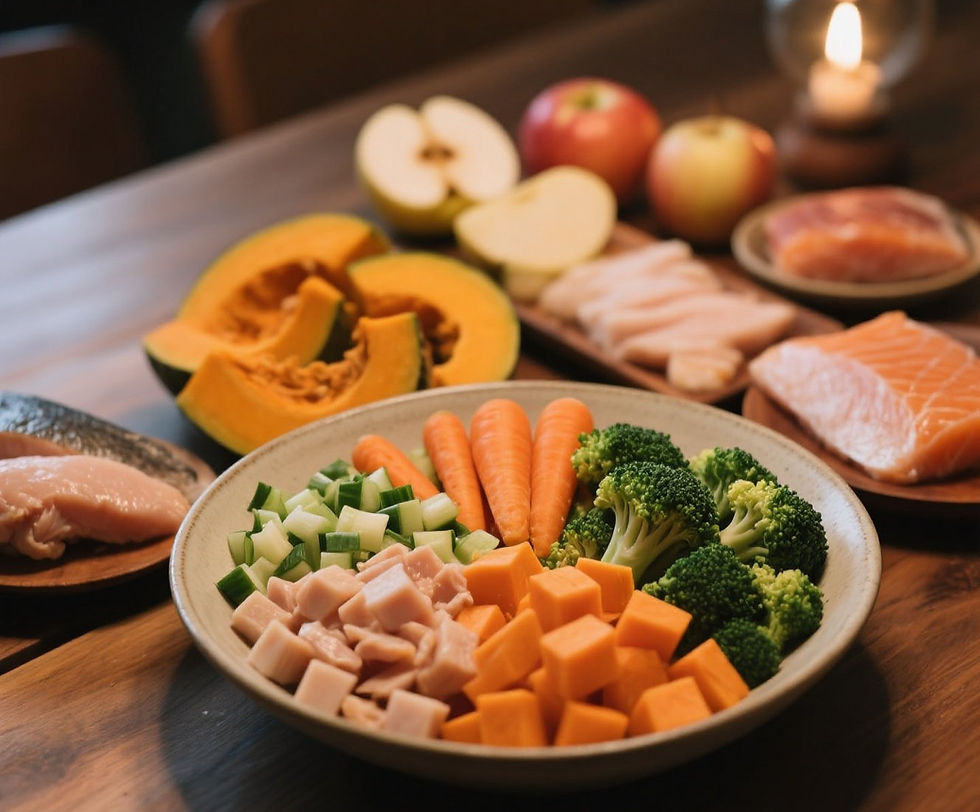
In contrast, the food designed by God contains divine wisdom that we still cannot fully replicate. Food is never a single chemical molecule, but a perfect system . Take pumpkin, for example, designed as a guardian of the kidneys and intestines. God placed abundant soluble fiber in its golden flesh to absorb toxins and excess water (to stop diarrhea), while simultaneously adding enough water and pectin to lubricate the intestines (to prevent constipation). The balance between stopping diarrhea and relieving constipation, which is difficult to achieve with medication, is achieved by a single pumpkin. This is "balance." Consider cabbage, which contains natural glutamine , a miraculous ingredient for repairing the gastric mucosa, and is also rich in sulfides that can activate liver detoxification enzymes. When we eat it, we are not only protecting our stomachs, but also helping our kidneys relieve the burden of detoxification. This is compassion .

Why do people say that medicine is like a loan?
In this article, we will dissect the logic behind common medications for the five internal organs (heart, liver, spleen, lungs, and kidneys) and explain how nutrition can help prevent the body from going bankrupt. The Fuzzywuzzycare team will guide you out of this cycle, revealing the heavy price your body is paying behind those "life-saving drugs" from both pharmacological and nutritional perspectives.
First, let's talk about what everyone is familiar with: Sub-Q Fluid (subcutaneous infusion).
For kidney failure, the standard procedure for almost all veterinarians is to administer water.
Veterinary logic: Diluting toxins (BUN/CREA) in the blood lowers the levels and puts parents at ease.
The truth about the body:
Blood dilution: The injected saline solution dilutes toxins, but also red blood cells (leading to anemia) and nutrients.
Nutrient loss: The process of forced diuresis is like a heavy rain washing away the soil, flushing away the body's most precious water-soluble vitamins (B complex) and trace elements (potassium, magnesium, zinc) .
The cells remain dry: the injected water remains in the extracellular fluid (causing subcutaneous edema), but due to the lack of high-quality proteins and ion channels , it cannot enter the cells for repair.
The blood test results came back positive, but the dog became increasingly weak, listless, and its muscles atrophied. This was because the nutrients were being "washed away."
The truth about the side effects of drugs for the five internal organs
The essence of Western medicine is to fight : fight against blood pressure, fight against bacteria, fight against inflammation.
But every confrontation will result in "chain damage" .
Heart & Kidney
Commonly used medications: ACEIs (antihypertensive drugs), diuretics (Furosemide/Spironolactone), and cardiac stimulants (Vetmedin).
Price:
Kidneys for Heart: In order to reduce the burden on the heart, antihypertensive drugs forcibly dilate blood vessels, leading to insufficient filtration pressure inside the kidneys. The kidneys are in a state of "hypoperfusion (ischemia)" for a long time, and the cells slowly die.
Artificial dehydration: Diuretics drain the body of water. This is devastating for a kidney that needs water to detoxify. This explains why, even when heart disease is under control, SDMA levels continue to rise.
The result: We saved a beating heart, but in return, we gained a withered and failing kidney.
Spleen and Stomach and Immune Collapse
Commonly used medications: antibiotics, antacids (Omeprazole), and anti-nausea medications (Cerenia).
Price:
Immune System Explosion: Antibiotics are indiscriminate killers, eliminating not only pathogens but also beneficial gut bacteria. The gut is the headquarters of the immune system; once the gut microbiota collapses, toxins are released directly into the bloodstream, triggering further inflammation. The gut microbiota is the headquarters of the immune system; once the gut microbiota collapses, the body loses its ability to repair itself, falling into a vicious cycle of "inflammation-medication-re-inflammation."
Digestive capacity reduced to zero: Antacids neutralize stomach acid, which may stop stomach pain, but they also cause the body to lose its ability to digest protein and absorb calcium and iron, leading to a worsening of cachexia (body self-consumption and continuous muscle loss) .
Liver
Commonly used medications include: pain relievers (NSAIDs), steroids, and all oral medications.
Price:
The liver is the body's chemical factory. Every medication must be broken down by the liver's P450 enzyme system. Long-term use of multiple medications leaves the liver with no time to process nutrients from food, and it can only work tirelessly to "detoxify drugs."
Nutritional strategies to turn the tide
How does nutrition combat drug damage?
We are not against emergency medication, but in the long fight against disease, if there is no functional nutrition to neutralize the side effects of drugs, or even partially replace the role of drugs, we may not be able to stop this vicious cycle of "disease and medicine". And drugs do leave a mess. So how can nutrition strengthen the body?
Here are some examples of its application in the Project Miracle.
We empathize with parents who choose to continue taking medication due to medical anxiety, and we can only offer support from the sidelines.
For example:
Combating Drug-Induced Ischemia: We Choose L-Citrulline
Since ACEIs cause renal ischemia, we use L-Citrulline to convert it into nitric oxide (NO) in the body, gently opening up the renal microvessels, allowing oxygen to re-enter the cells, reducing SDMA, but without the side effects of Western medicine.
Combating "Drug-Induced Dehydration": Biological Water
Since diuretics work by draining water, we'll use fresh food with 80% high water content . The water in food is bound to amino acids, making it "living water" that can truly penetrate into cells, repair dehydration, and reduce BUN from the source.
Combating "heart weakness": Coenzyme Q10, Ubiquinol, D-Ribose, etc.
Instead of whipping the heart with drugs, give it energy. Q10 ignites the power plants of heart muscle cells, and D-Ribose quickly replenishes ATP. When the heart has the strength to pump blood, edema naturally subsides, and the need for diuretics decreases.
Combating "Cellular Necrosis": Fucoidan
When the damage is deemed irreversible, we introduce fucoidan to activate the release of stem cells from the bone marrow, allowing them to migrate to the damaged organs for repair. This utilizes the body's own regenerative capabilities to counteract the damage caused by the drugs.
The wisdom of nature vs. the coercion of chemistry
Lowering blood pressure? Did you know there are "natural ACEIs" that can replace chemical blood pressure lowering?
Western ACEI drugs (such as Benazepril) simply dilate blood vessels mechanically. They don't care whether the kidneys are ischemic or the heart is strong; they just "suppress" blood pressure.
The wisdom of nature: Organic hawthorn contains natural proanthocyanidins (OPC), which can dilate peripheral blood vessels and lower blood pressure like ACEIs, but at the same time, it can enhance myocardial contractility (Positive Inotropic).
As a result , while lowering blood pressure, it also ensures that blood can be effectively delivered to the kidneys. This is not simply "reducing blood pressure," but optimizing blood flow dynamics . This is a perfect balance that a single ingredient in Western medicine cannot achieve.
Are diuretics necessary? Did you know that "fruit and vegetable diuretics" can replace chemical diuretics?
Diuretics have a simple and brutal instruction—"drain water." They don't care how much water is left in the body or whether there is an electrolyte imbalance. They are like a guard that only opens the gate to let water out, ultimately leading to the body drying out.
The wisdom of nature: fruits and melons (such as jade melons and winter melons) or dandelion leaves designed by God are diuretics with built-in safety belts .
Naturally sourced water: Natural diuretic foods typically have an extremely high water content (95%+). While promoting urination, they also replenish the body with plenty of "biological water."
They are naturally replenished: they are rich in potassium and magnesium ions. As urine carries away electrolytes, the food itself is simultaneously replenishing them.
The result is a healthy cycle of "inflow and outflow," rather than the predatory diuretic effect of Western medicine that "only outflows and no inflows."
At FUZZYWUZZYCARE, we try to reduce reliance on medication using natural foods, not because we hate science, but precisely because we respect life and are knowledgeable about pharmacology, food, nutrition, clinical diseases, and other related fields. We have a fair understanding of the "forced administration" of chemical drugs, and we also understand the "natural and physiological" principles of natural nutrition.
When we provide the body with the right ingredients (hawthorn, melons, and CoQ10), the body will naturally find its balance. This is the true way to address the root cause.
Dignity of life
This is a profound reflection on "drug side effects" and "the dignity of life" .
Looking at those thick medical records, we often feel an indescribable pain in our hearts:
"If it doesn't take these medications, it might be able to walk; but if it takes these medications, it might have a harder time walking."
We understand the anxiety of going to the vet every week or two, and we understand that you don't want to miss any treatment opportunities. But please stop for a moment and look at your pet. What it needs may not be a tenth medication, but a bowl of food that it can eat comfortably, and some time spent with it without the torment of medication side effects.
True medicine should not just prolong the time it takes to breathe, but improve the quality of life.
If medication causes a pet to lose its appetite, energy, and dignity, should we reconsider: is this really the outcome we want? We are not here to challenge medical treatment, but rather to hope to light another lamp for the world of furry children , beyond medication.
"When we use medication to desperately keep the heart beating, are we also extinguishing its will to live?"
This is a cruel cycle: a weak heart requires medication; because of the medication, the kidneys become ischemic, the stomach churns, and the dog loses its appetite. When a dog can't even manage the most basic act of "eating," even the strongest medication is just a bunch of unabsorbable chemicals.
The doctor said, "You can't stop taking the medication; your heart won't be able to handle it if you do."
But we want to ask: "If we continue eating, our kidneys can't take it, our spirits can't take it, and we can't even eat a single bite of food, is this really the kind of life we want?"
There is often a huge gap between medical standards and quality of life.
We cannot make medical decisions for you, but data and clinical manifestations often tell us:
The dosage of the medication may have exceeded the limits that an elderly body can withstand.
This is a dilemma with no perfect answer. But remember: being able to eat, sleep, and wag your tail is always more important than a good blood test result. Perhaps one day, trying to discuss "reducing medication" or "medication vacation" with your doctor to give your body some breathing space is the only way to break this vicious cycle.
A tragic case of a cat with kidney disease: IV fluids? Or no IV fluids?
In the files of Project Miracle, we've heard far too many heartbreaking stories: pets were hospitalized and given IV/subcutaneous fluids for days on end. Blood test results came back: CREAM levels had dropped, BUN levels had dropped, and the doctor said, "Things are improving."
But not long after being discharged from the hospital, the dog suddenly experienced shortness of breath, went into shock, and even passed away that very night.
Why? Because "they healed the numbers on the paper, but killed the life in the bed."
The heart can drown internally: many elderly children with kidney failure already have fragile hearts. Forcing hundreds of milliliters of water into the body is simply too much for the heart to handle. Where does this water go? It accumulates in the lungs (pulmonary edema) or the chest cavity. Blood pressure drops because the blood is diluted; but the flame of life is extinguished because the heart has collapsed from the flooding.
And... even administering subcutaneous fluid at home, the pain and struggle erode the pet's trust in its owner every day. When it hides from you, when it cowers in a corner out of fear of pain, this stressful state of high cortisol levels further raises blood sugar and blood pressure, accelerating physical collapse. Ask yourself, if the final days are spent in fear and under the needle, is this truly the "prolongation" we want?
The wisdom of medicine lies in knowing how to "choose medicine from food"!
We oppose indiscriminate use of medication, but we support functional medication . If there is a class of medications with relatively manageable side effects, and its function is to "help the pet start eating again," then that class of medications is our ally .
Rather than administering water, multiple medications, and antibiotics, we encourage parents to proactively discuss the following two types of medications with their veterinarian:
1. Anti-nausea medications – such as Cerenia (Maropitant)
Why is it worth eating?
The biggest enemy of kidney failure is the "nausea caused by uremia". When toxins make your pet want to vomit, it will naturally refuse to eat. However, if it does not want to eat, its weight will drop and its immune system will collapse. No matter how good the nutrition is, it can only play its role if it can be ingested and used by the cells.
Cerenia can effectively block vomiting signals.
Its side effects are relatively safe. It mainly acts on nerve receptors and is not excreted in large quantities by the kidneys.
Stopped vomiting -> started eating -> got nutrition -> now the body has the strength to fight. This is an extremely cost-effective medicine.
2. Appetite stimulants – such as Mirtazapine/Entyce
Why is it worth eating?
For pets with cachexia (muscle loss), the feeling of hunger has disappeared. Appetite stimulants can forcibly awaken the hunger center.
side effect
Mirtazapine (commonly used in cats/can also be used in dogs): May cause over-excitement and increased vocalization, but usually short-lived.
Entyce (Capromorelin): A hunger stimulant with very few side effects.
Being able to eat is a win. As long as it's willing to open its mouth, fresh and varied food will do its job.
Medicine itself is neither good nor evil; it is how we use it that matters.
Avoid any medications that "suppress bodily functions" (such as diuretics and antibiotics) if possible, as they may have side effects.
Any medicine that "restores bodily functions" (such as anti-nausea and appetite stimulants): Use it when appropriate to pave the way for food to strengthen the body's foundation and promote healing.
Parents, please learn to communicate with your veterinarian: "Can we reduce the frequency of IV fluids and try anti-nausea and appetite stimulants instead, so that your pet can try eating on its own?" This may be the gentlest redemption you can offer your beloved pet during the "palliative care period."


Comments